

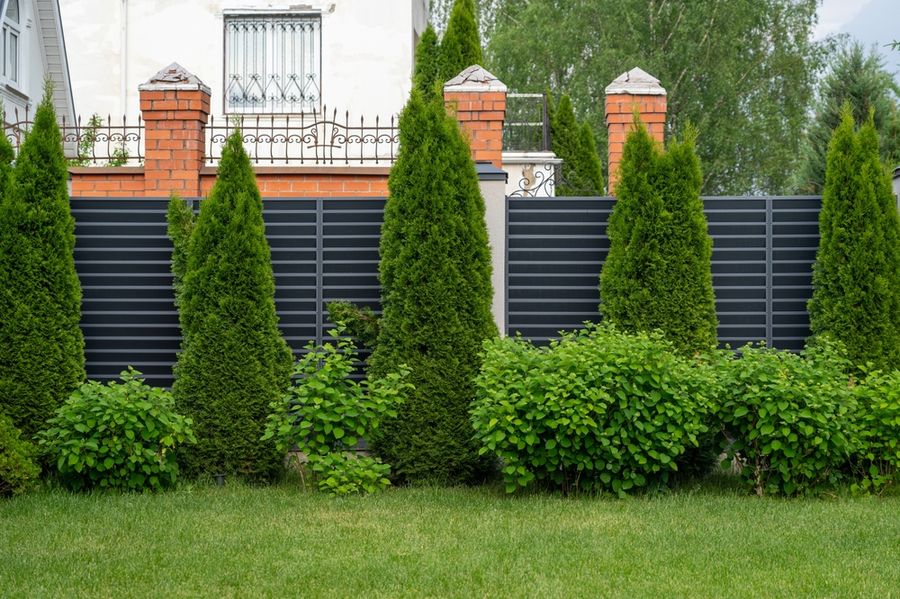
Creating a private backyard doesn't necessarily mean installing a traditional fence. Whether you're dealing with nearby neighbors, overlooking windows, or an exposed patio, several alternatives can help create a more secluded outdoor environment. Some solutions use plants to form natural barriers, while others rely on decorative structures or adjustable screens. The best choice depends on your available space, desired level of privacy, and maintenance preferences. With thoughtful planning, you can make your backyard feel more comfortable without enclosing the entire property.
1. Plant a Living Privacy Screen With Trees and Shrubs
Trees and shrubs can create attractive visual barriers while adding greenery to your property. Evergreen varieties are particularly useful because they retain their foliage throughout the year, providing screening even when deciduous plants lose their leaves. American arborvitae, eastern redcedar, and certain holly varieties are potential choices, depending on your region and growing conditions.
Before planting, consider the mature height and width of each species. Placing trees too close together can restrict healthy growth, while excessive spacing may leave unwanted gaps. A mixed arrangement of evergreens and deciduous shrubs can provide privacy while reducing the risk of losing an entire screen to a single pest or disease problem.
This approach works particularly well along property boundaries and behind seating areas. However, living screens require patience while plants establish themselves. Choose varieties suited to your USDA Plant Hardiness Zone, sunlight exposure, and soil conditions, and check for underground utilities before digging.
2. Install a Pergola With Outdoor Privacy Curtains
A pergola can transform an exposed patio into a more sheltered outdoor living area. Although traditional pergolas have open sides, adding weather-resistant curtains creates adjustable privacy without requiring a permanent perimeter fence.
Choose curtains designed for outdoor use, preferably with materials resistant to moisture, fading, and mildew. Install them on tracks or sturdy rods attached to the pergola, allowing individual sections to open or close. This arrangement makes it possible to block views from neighboring yards while maintaining airflow when privacy isn't necessary.
Consider the direction of prevailing winds before selecting hardware. Curtains should be secured when extended and retracted during severe weather to prevent damage. Pergolas themselves must also be properly anchored, and homeowners should verify whether local building requirements or homeowners association rules apply. For additional overhead screening, a compatible shade canopy can help reduce visibility from elevated windows.
3. Use Trellises and Climbing Plants for Vertical Privacy
A trellis covered with climbing plants offers a practical solution when ground space is limited. Unlike large hedges, vertical screens can fit beside patios, narrow garden beds, and outdoor dining areas without occupying substantial lawn space.
Wooden or metal trellises can support climbing plants such as coral honeysuckle, native clematis, or American wisteria where growing conditions are suitable. Plant selection matters because mature size, growth habits, and regional invasiveness vary considerably. Choosing an appropriate species can create a visually appealing screen while supporting local wildlife.
For greater flexibility, install a trellis inside a large planter rather than directly in the ground. This allows the screen to define a seating area without altering the entire landscape. However, container-grown vines need sufficient root space, reliable watering, and secure structural support. Remember that deciduous vines may offer little privacy during winter.
4. Arrange Decorative Privacy Screens Around Seating Areas
Freestanding privacy panels provide an immediate alternative to growing a hedge. Available in materials such as wood, aluminum, composite, and weather-resistant resin, these structures can screen specific portions of a backyard without enclosing the entire space.
Consider placing panels behind a lounge area, beside a hot tub, or between neighboring patios. Slatted designs offer partial screening while allowing light and air to pass through, whereas solid panels provide more complete visual separation. Decorative cutout patterns can also create privacy without making a compact backyard feel completely enclosed.
Measure the area before purchasing panels and consider the angle from which neighbors can see into your yard. A screen that blocks ground-level views may do little against second-story windows. Tall panels require suitable anchoring because wind can place substantial pressure on them. Check local regulations before installing large or permanently mounted structures.
5. Create Privacy With Tall Ornamental Grasses and Raised Planters
Tall ornamental grasses can soften sightlines while introducing movement and texture into backyard landscaping. They are especially useful when homeowners want a natural appearance without the density or maintenance requirements of a formal hedge.
Species such as switchgrass and big bluestem can form attractive seasonal screens in suitable climates. These grasses differ in mature height, width, and growing requirements, so selections should reflect local conditions. Native grasses can also support wildlife and contribute to more diverse landscapes.
For a patio or deck, raised planters can elevate plants to the height where screening is most useful. Arrange several large containers along the exposed edge of a seating area, selecting plants that tolerate container growing. Keep in mind that ornamental grasses often need seasonal cutting back, leaving limited coverage during part of the year. Combining them with evergreen shrubs or decorative panels can provide more consistent privacy.
Choosing the Right Privacy Solution for Your Backyard
A successful backyard privacy project begins with identifying exactly where unwanted views originate. A patio overlooked by neighboring windows may benefit from a pergola or strategically positioned screen, while an exposed property boundary may be better suited to trees and shrubs.
You can also combine several approaches instead of relying on a single barrier. For example, a trellis might shield an outdoor dining table while ornamental grasses soften nearby sightlines. Before installing permanent features, check property boundaries, local restrictions, and maintenance requirements. With the right combination of landscaping and outdoor structures, you can create a more secluded backyard without building a traditional fence.