

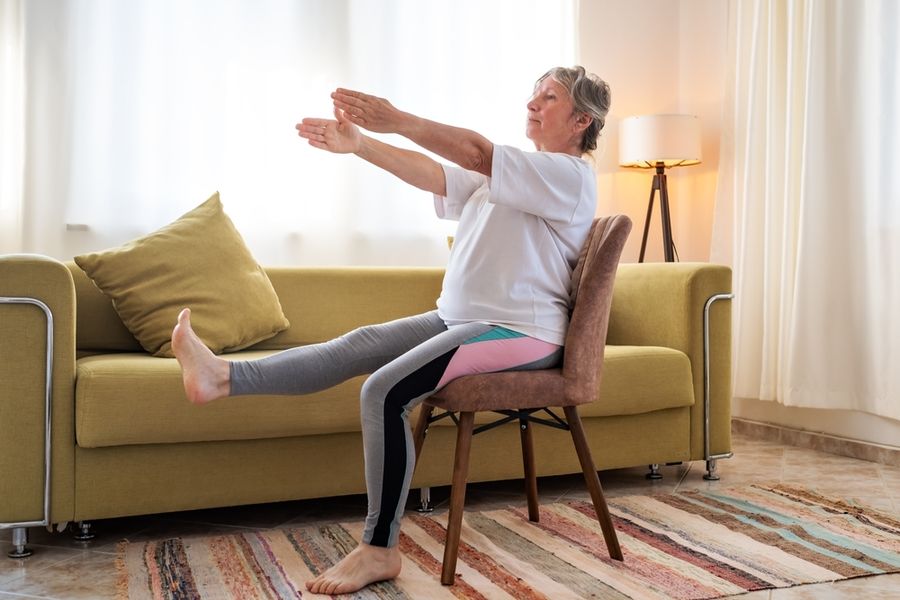
Maintaining leg strength becomes increasingly important with age, particularly for everyday activities such as walking, climbing stairs, and getting out of bed. However, traditional exercise routines may feel challenging for older adults with limited mobility or concerns about balance. Chair-based exercises offer a practical alternative, allowing individuals to work important muscle groups while remaining seated or using a chair for support. With consistent practice and appropriate precautions, certain movements can help preserve strength, improve mobility, and support greater independence.
1. Seated Leg Extensions for Stronger Thighs
Seated leg extensions target the quadriceps, the muscles at the front of the thighs that help straighten the knees. Maintaining strength in these muscles supports activities such as walking, standing up, and climbing stairs.
Begin by sitting upright in a sturdy chair with both feet flat on the floor. Slowly straighten one knee, extending the lower leg forward as far as comfortable. Pause briefly, then lower the foot in a controlled movement. Repeat 10 times before switching legs. Avoid locking the knee or swinging the leg for momentum. This movement can help strengthen the thighs and may improve knee comfort.
2. Seated Marching to Strengthen the Hips
Seated marching works the hip flexors and surrounding thigh muscles, which contribute to lifting the legs during walking and other everyday movements. It also encourages controlled movement while maintaining an upright seated position.
Sit toward the front of a stable chair with your back straight and feet resting on the floor. Lift one knee toward your chest as far as comfortable without leaning backward, then slowly lower your foot. Repeat with the opposite leg, alternating for approximately 5 repetitions per side. Keep your movements steady rather than rushing. Holding the sides of the chair can provide additional stability when necessary.
3. Seated Heel Raises for Calf Strength
Calf muscles play an important role in walking, ankle movement, and pushing off the ground with each step. Seated heel raises offer a gentle way to engage these muscles without requiring prolonged standing.
Sit with your feet flat on the floor and your knees comfortably bent. Keeping your toes planted, slowly lift both heels as high as possible, then lower them. Start with 10 controlled repetitions. To make the movement more challenging, pause at the top or perform additional repetitions as strength improves. Avoid pushing through ankle pain or lifting the heels abruptly.
This exercise can be incorporated into a short seated routine and is particularly convenient for older adults who spend extended periods sitting. Although seated heel raises offer useful muscle activity, standing variations generally provide greater resistance once they can be performed safely.
4. Resistance Band Leg Presses for Multiple Muscle Groups
A seated leg press using an exercise band can work several lower-body muscles simultaneously. The movement engages the quadriceps, hamstrings, and calves while allowing resistance to be adjusted according to individual strength.
Sit upright with one knee bent and place the middle of a resistance band securely around the sole of that foot. Hold the band ends near your waist, maintaining controlled tension. Slowly push the foot forward to straighten the leg against resistance, then bend the knee to return to the starting position. Repeat several times before changing legs.
Begin with a light resistance band and inspect it for damage before use. Keep your grip secure and avoid allowing the band to snap back. Anyone unfamiliar with resistance training may benefit from guidance from a physical therapist.
5. Seated Toe Raises for Lower-Leg Control
The muscles along the front of the lower legs help lift the feet while walking. Maintaining their strength can support foot clearance and controlled ankle movement, both of which contribute to everyday mobility.
Sit upright with both feet flat on the floor. Keep your heels planted while lifting your toes and the front portions of your feet toward your shins. Pause briefly before lowering them. Aim for approximately 10 slow repetitions, adjusting the number according to comfort and ability.
Seated toe raises can be alternated with heel raises to exercise different lower-leg muscles. However, they should complement rather than replace standing balance activities when those activities are safe and appropriate.
6. Sit-to-Stand Exercises for Functional Leg Strength
For older adults who can stand safely, repeatedly rising from a chair provides a practical way to strengthen the legs. This movement closely resembles everyday activities and engages major muscles around the hips and knees.
Sit near the front of a sturdy, nonrolling chair with your feet approximately hip-width apart. Lean forward slightly, press through your feet, and slowly rise to a standing position. Once upright, carefully lower yourself back into the chair. Begin with a few repetitions, using the armrests for assistance if needed. This movement helps develop functional strength for daily activities.
Only attempt this exercise if you can stand safely. Individuals with significant balance difficulties may need supervision or an alternative seated movement.
Building a Safe and Consistent Chair Exercise Routine
Chair exercises can help older adults maintain leg strength without requiring complicated equipment or strenuous workouts. Combining thigh, hip, calf, and ankle movements creates a more balanced routine that addresses several muscle groups involved in daily mobility.
Start with manageable repetitions, allow time for recovery, and gradually increase difficulty as movements become easier. Older adults are generally encouraged to include muscle-strengthening activity at least twice weekly. Anyone with significant mobility limitations, recent surgery, or relevant medical conditions should seek individualized guidance before beginning. Stop exercising if pain, dizziness, or unusual breathlessness develops.
With regular practice and appropriate progression, chair exercises can become a valuable part of maintaining physical function, confidence, and independence as the years go by.