

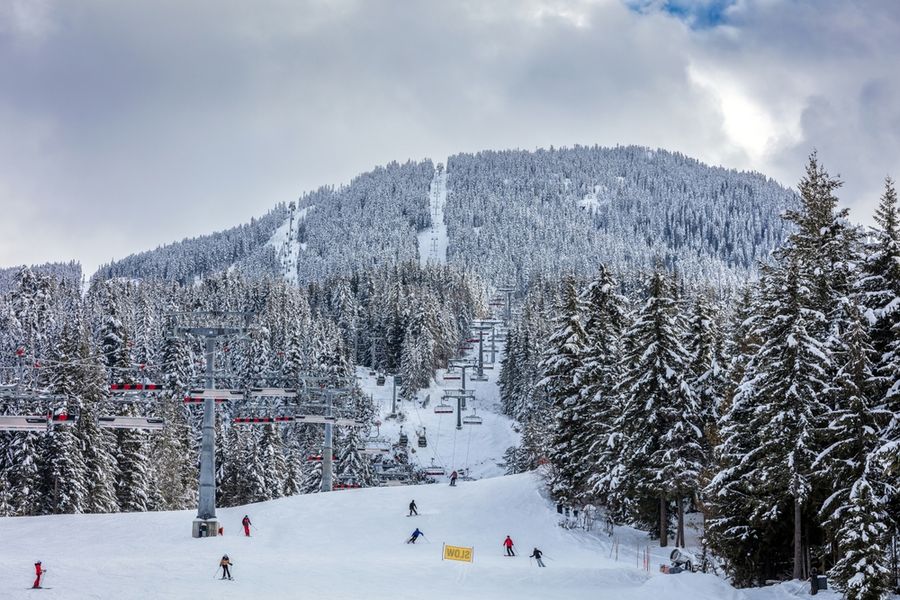
North America offers some of the world's most spectacular winter landscapes, from powder-dusted mountain peaks to historic cobblestone streets blanketed in snow. Whether the goal is world-class skiing, cultural immersion, or chasing the Northern Lights, we've got eight destinations that deliver unforgettable cold-weather experiences.
1. Whistler Blackcomb, British Columbia
Consistently ranked as the top ski resort in North America, Whistler Blackcomb in British Columbia earns its reputation through sheer scale and variety. Spanning 3,307 hectares of skiable terrain across two linked mountains, the resort features more than 200 marked runs, 36 lifts, and 16 alpine bowls connected by a breathtaking peak-to-peak gondola. Beyond downhill skiing, the resort also draws visitors for snowmobiling, dog sledding, snowshoeing, and ziplining, making it a compelling winter destination for non-skiers as well. A lively après-ski culture adds another layer of appeal, rounding out each day on the slopes with vibrant dining and entertainment options.
2. Quebec City, Quebec
Quebec City stands apart as one of the most enchanting urban winter destinations on the continent. Its UNESCO World Heritage-listed historic district transforms into a storybook setting each winter, with frost-covered cobblestone streets, festive Christmas markets, and centuries-old architecture dusted in snow. Unlike ski-focused destinations, Quebec City rewards travelers who want cultural depth alongside seasonal charm, offering world-class dining, ice sculpture festivals, and horse-drawn carriage rides through the Old Town.
3. The Canadian Rockies: Banff and Jasper
The mountain towns of Banff and Jasper anchor one of Canada's most iconic winter regions. Nestled within the Canadian Rockies, these communities serve as base camps for skiing, snowboarding, snowshoeing, and dog sledding adventures set against dramatic mountain backdrops. Frozen lakes, steaming hot springs, and wildlife sightings further enrich the experience. Banff National Park in particular draws visitors from around the world who come specifically for its combination of outdoor adventure and visual grandeur during the winter months.
4. Utah's Ski Country
Utah is home to the largest ski resort in the United States and several mountains that routinely record snowfall totals exceeding 500 inches annually, making it the snowiest ski region in all of North America. A major logistical advantage is that many of these resorts sit within an hour's drive of Salt Lake City's international airport, making Utah unusually accessible for a ski trip. The combination of light, dry powder and convenient access has turned this state into a magnet for serious skiers and first-timers alike.
5. Taos Ski Valley, New Mexico
New Mexico may surprise travelers who associate skiing strictly with Colorado or the Pacific Northwest, but the state delivers over 200 inches of annual snowfall alongside more than 300 sunny days per year. Taos Ski Valley is the state's flagship resort, drawing experienced skiers with its challenging terrain and steep runs. It also holds the distinction of being the first ski resort in the world to earn B-Corp certification and one of only a few to achieve Certified CarbonNeutral® status. The resort's proximity to Taos Pueblo and a rich Southwestern arts scene gives it cultural dimension that few mountain destinations can match.
6. Whitefish Mountain Resort, Montana
Montana's Whitefish Mountain Resort offers nearly 3,000 acres of terrain with sweeping 360-degree views that take in the Flathead Valley, Glacier National Park, and the Northern Rockies all at once. This resort tends to attract skiers who prefer a quieter, more authentic mountain town atmosphere compared to busier Colorado destinations. The charming town of Whitefish itself provides cozy lodging, local restaurants, and a relaxed pace that complements the adventure on the slopes.
7. Vermont: Killington and Stowe
Vermont brings a distinctly New England character to the winter vacation experience. Killington, nicknamed the "Beast of the East," holds the title of Vermont's largest ski resort and serves as a proving ground for East Coast skiers throughout the season. Stowe offers a more refined atmosphere, with artisanal shops, a picturesque town center, and a European village aesthetic that sets it apart from typical American ski towns. Condé Nast Traveler noted that East Coast resorts have made a strong showing in recent rankings, with Vermont destinations earning top-10 placements for consecutive years.
8. The Yukon, Canada
For travelers seeking something beyond skiing, the Yukon offers a winter experience rooted in wilderness and natural wonder. Positioned directly beneath the Auroral Oval and home to a sparse population spread across a vast territory, the Yukon provides some of the darkest, clearest skies in Canada, making Northern Lights sightings remarkably reliable between late August and mid-April. Dog sledding, snowshoeing, and ice fishing round out the activity options, but many visitors come primarily for the aurora. The territory's minimal light pollution and remote character create conditions that few places on Earth can replicate.
Is It Time To Plan a Winter Trip?
From the massive ski terrain of Whistler Blackcomb and Utah's powder-laden resorts to the aurora-lit skies above the Yukon and Quebec City's historic winter streets, North America offers winter travel experiences that rival any destination in the world. Colorado also continues to dominate ski rankings, with ten resorts appearing in the top 30 nationally according to reader votes. Each destination on this list brings something distinct, whether that is record snowfall, cultural richness, environmental stewardship, or raw natural beauty. Researching these destinations in depth can help winter travelers match the right experience to their interests, travel style, and seasonal goals, ensuring that every cold-weather trip becomes a genuinely memorable one.