

Staying physically active can be challenging when knee discomfort makes running, jumping, or other high-impact exercises unpleasant. However, avoiding cardiovascular exercise altogether may contribute to reduced stamina, weaker muscles, and greater difficulty performing everyday activities. Fortunately, several low-impact workouts can help strengthen the heart while placing less stress on sensitive joints. From water-based exercise to stationary cycling, choosing the right activity can make movement more comfortable and sustainable.
1. Swimming for Cardiovascular Fitness Without Joint Impact
Swimming is an appealing option for adults with sensitive knees because water supports the body's weight, reducing the load placed on joints. Unlike running or jumping, swimming allows people to elevate their heart rate without repeatedly landing on hard surfaces.
Begin with short sessions at a comfortable pace, alternating swimming laps with periods of rest. Freestyle or backstroke may feel more comfortable than breaststroke for individuals whose knees are sensitive to twisting or bending movements. Focus on relaxed, controlled movements rather than attempting to swim quickly.
Swimming is among the low-impact activities commonly recommended for individuals managing knee arthritis because it allows cardiovascular exercise with less joint stress. Adults who are uncomfortable swimming should consider supervised aquatic exercise instead of attempting unfamiliar strokes.
2. Stationary Cycling for Controlled Knee Movement
Stationary cycling provides cardiovascular exercise while allowing individuals to control speed, resistance, and workout duration. Because the feet remain supported by the pedals, the knees avoid the repeated impact associated with jogging.
Begin with approximately five minutes of easy pedaling at minimal resistance. Increase the duration gradually as comfort improves, and avoid resistance levels that require forceful pushing. Adjust the seat so the knee remains slightly bent when the pedal reaches its lowest position. Poor positioning can make an otherwise gentle workout uncomfortable.
A recumbent bicycle may be particularly useful for people with balance difficulties or those who prefer additional back support. Both upright and recumbent stationary bicycles can provide aerobic exercise for people who struggle with walking or have joint problems.
3. Water Aerobics for Gentle Full-Body Movement
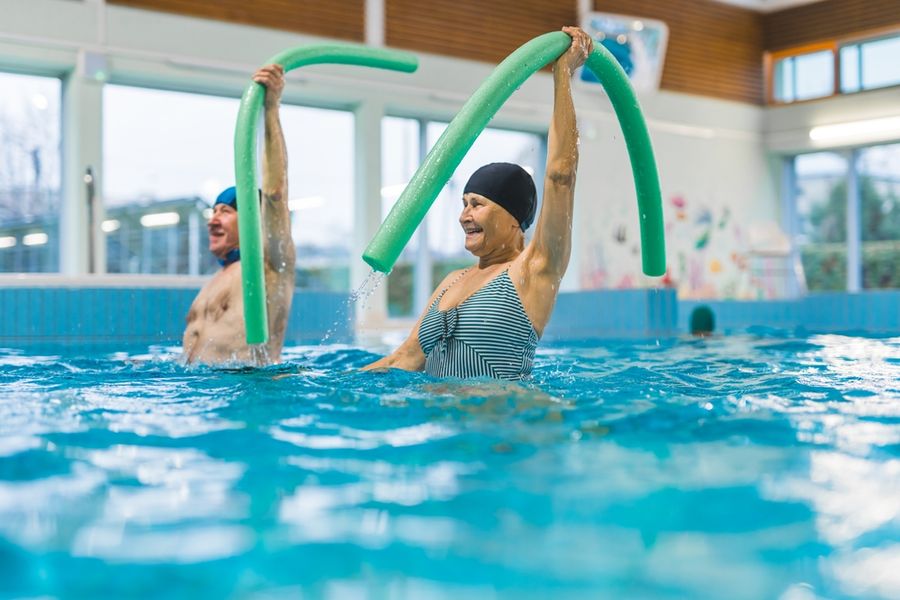
Water aerobics offers many benefits of swimming without requiring advanced swimming skills. Participants typically exercise while standing in waist-deep or chest-deep water, performing movements that increase heart rate and engage several muscle groups.
Common activities include walking through the water, gently marching in place, and moving the arms against water resistance. Buoyancy reduces the amount of body weight supported by the knees, while water resistance provides opportunities to strengthen muscles. Aquatic exercise can also improve pain and everyday function for some people with knee osteoarthritis.
Look for beginner-friendly aquatic fitness classes, particularly those designed for adults with arthritis or mobility limitations. Avoid movements involving sudden twisting or forceful knee bending. The instructor should be able to suggest modifications based on individual comfort.
4. Elliptical Training for Low-Impact Indoor Cardio
Elliptical machines reproduce a walking-like movement without requiring the feet to repeatedly strike the ground. This makes them useful for adults who want an indoor cardiovascular workout but find running uncomfortable.
Start with low resistance and a comfortable stride length. Keep your feet flat against the pedals, maintain an upright posture, and use the handlebars for balance without leaning heavily on them. Begin with five to ten minutes and increase workout time as your endurance improves.
The elliptical's continuous gliding motion can place less force on the knees and hips than higher-impact activities while still providing cardiovascular benefits. However, the standing position and repetitive knee bending may not suit everyone. People experiencing discomfort should reduce resistance or consider a seated exercise alternative.
5. Walking on Level Ground for Accessible Daily Exercise
Walking requires minimal equipment and can be incorporated into everyday routines, making it one of the most accessible cardiovascular activities. Although walking involves weight-bearing movement, it generally produces less impact than running.
Choose relatively flat, even surfaces rather than steep hills or uneven trails. Wear supportive walking shoes and begin with a comfortable pace. If continuous exercise is difficult, divide activity into shorter walks throughout the day. For example, two ten-minute sessions may feel more manageable than one longer outing.
Walking can help improve cardiovascular fitness while supporting the muscles involved in everyday mobility. For individuals with knee arthritis, beginning slowly and increasing distance over time is generally preferable to attempting long walks immediately. Downhill walking may aggravate symptoms, making route selection especially important.
How to Choose the Right Activity for Your Knees
The most suitable exercise depends on the cause of knee discomfort, current mobility, and individual preferences. Swimming and water aerobics may appeal to people who find weight-bearing activities uncomfortable, while cycling offers a seated alternative.
Consider trying different activities on separate days and observing how your knees respond during exercise and afterward. Some mild muscle fatigue is normal, but worsening joint pain, swelling, or instability should not be ignored. Persistent symptoms, recent injuries, or significant mobility limitations warrant guidance from a healthcare professional.
A balanced routine may combine cardiovascular exercise with appropriate leg-strengthening movements. Stronger supporting muscles can help improve joint function, although exercise selection should reflect individual needs.
Building a Knee-Friendly Cardiovascular Routine
Sensitive knees don't necessarily prevent adults from maintaining cardiovascular fitness. Swimming, stationary cycling, water aerobics, elliptical training, and level-ground walking offer different ways to remain active while limiting unnecessary joint impact.
General U.S. physical activity guidelines recommend working toward at least 150 minutes of moderate-intensity aerobic activity each week, alongside muscle-strengthening exercise. However, smaller amounts can still provide benefits, and activity should be adapted to individual abilities.
Start with activities that feel manageable, increase duration gradually, and prioritize consistency over intensity. Choosing movements that respect your knees can make regular exercise more enjoyable and help support mobility, endurance, and overall health.